

The Firm That Wanted Nothing to Do With IT
John R. Waters & Company moved from a very hands-off approach to a provider that goes looking for problems instead of waiting to be told about them.
Copies of your data in more than one place, restores someone has actually tested, and a written plan for the day a server, a building or a person fails.
Ransomware gets the headlines. In our own list of the seven causes of data loss, four of them are just an ordinary Tuesday: somebody made a mistake, a drive gave up, an update went wrong, or water got somewhere it should not be. The cause almost never matters on the day. What matters is whether the copy you need still exists and whether anyone has ever restored from it.
Any of these can cost you a day, or a quarter:
Having backups and being able to recover are two different things, and the gap between them is where businesses get hurt. Three things close it, and you need all three.
Onsite and offsite backups are published inclusions of ITS managed IT services, and the network operations center is the part that checks the jobs actually ran. If your worry is an attacker deleting the copies rather than a drive failing, that is ransomware protection.
We inventory what data you have, where it actually lives, and which systems your business cannot trade without for a day. Most businesses find something they thought was backed up and is not.
How much recent work you could afford to re-enter, and how long you could afford to be down. Your answers are not ours to guess, and they are what size and price everything else.
Copies go onsite and offsite, and then we restore from them on a schedule and write down how long it took. The plan gets updated when the answer changes.
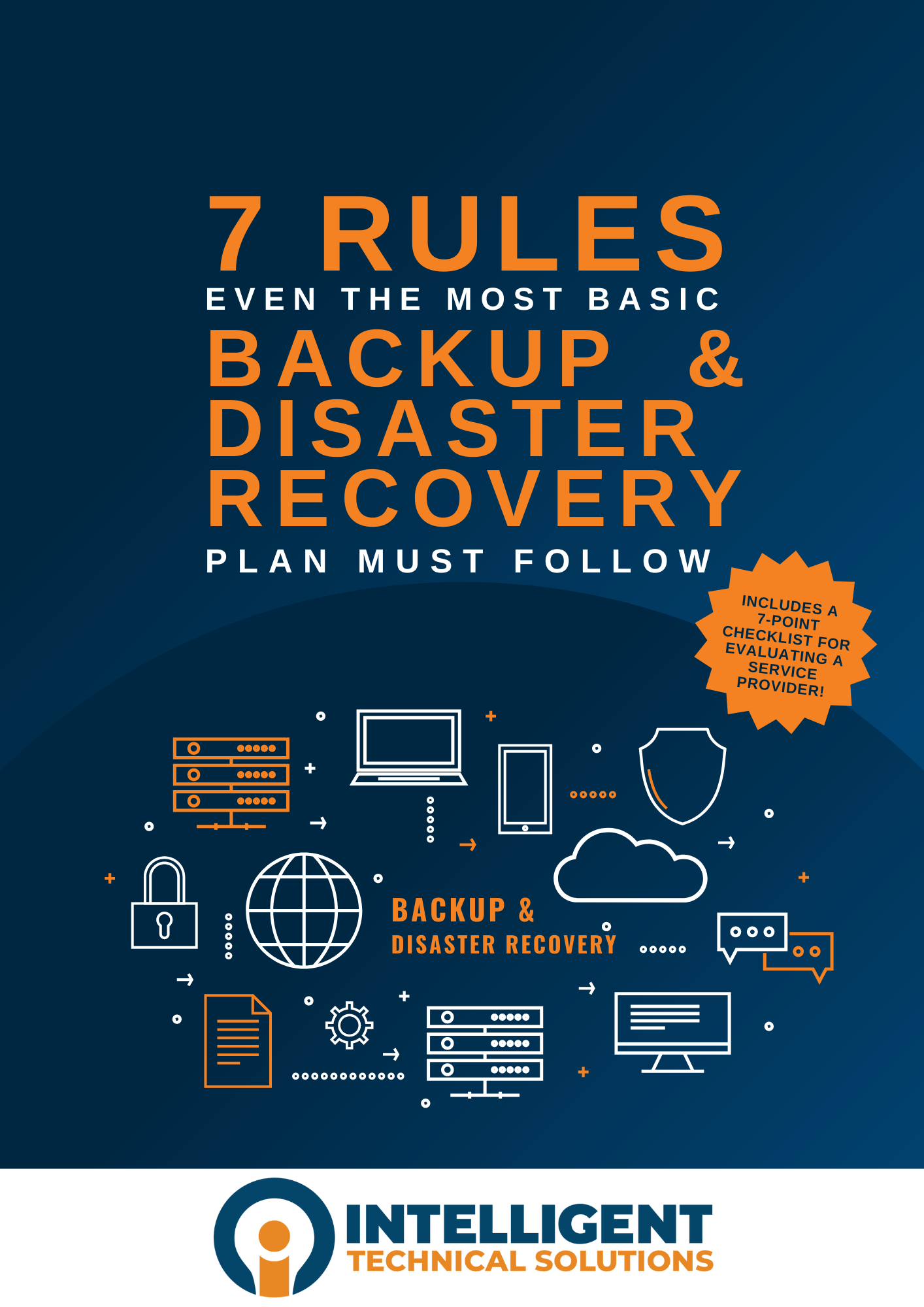
Our free eBook walks through the disaster types most businesses never plan for, a simple formula for working out what an hour of downtime costs you, why testing your backups is the part everyone skips, and how to tell a serious backup and disaster recovery provider from a cheap one. No jargon, and no form-filling beyond your name and email.
A backup is a copy of your data. A disaster recovery plan is the instructions for turning that copy back into a working business. Most companies have the first and not the second, which is why a bad morning turns into a bad week: the data is there, but nobody has agreed what comes back first, who authorises it, or where people work in the meantime. Business continuity is the wider question of how you keep trading while that happens.
You restore from it and time how long it took. There is no other way to know. As our Director of Operations puts it, backups are not a one-and-done thing: it is a journey, not a destination. A restore test usually needs a maintenance window and somebody's afternoon, so it is normally scoped and quoted as its own piece of work rather than something that quietly happens in the background. We would rather tell you that than let you assume.
Peter Swarowski, Director of Operations, ITS. [VERIFY BEFORE PUBLISH: ITS's published position in 2022 was that restore testing is a billed project. If testing is now bundled into a plan, this answer must say so instead. Do not ship either version unconfirmed.]
Those are the two numbers the whole design hangs on, and they are yours rather than ours. The first is how much recent work you could stand to re-enter, which sets how often copies are taken. The second is how long you could stand to be down, which sets what we restore onto and in what order. Both get agreed with you and written into the plan. Any provider quoting you those figures before asking about your business is quoting you a product, not a plan.
Longer than most people guess, and not forever. Two things set it. The first is regulation: HIPAA, for example, requires that records relevant to it are kept for six years from the date they were last used or last in effect. The second is how far back a problem can hide, because a corrupted file or a quiet deletion is often noticed weeks later. Keeping everything forever is expensive and increases what a breach can expose, so retention is a decision, not a default.
Source for the six years: HIPAA documentation retention requirement, as published at itsasap.com/blog/how-long-data-retention.
HIPAA does not certify backup products, so no honest provider will tell you their software is HIPAA compliant. What the rule actually asks for is a retrievable exact copy of electronic protected health information, a procedure for restoring it, and documentation you can show a reviewer. That is a design question and a paperwork question rather than a shopping question. We wrote up what the requirements actually say, and if healthcare is your reason for being on this page, start there.
[VERIFY the linked article's characterisation of the requirement before publish. This answer paraphrases the rule's intent rather than quoting a citation on purpose.]
BDR stands for backup and disaster recovery, and in practice it usually means a device that sits on your network holding copies and, if a server dies, standing a temporary one back up from them so people can keep working. It is the difference between having your data and having your business. You do not always need one: it depends on whether you still run servers on site and how long you could work without them. Ransomware recovery is a related but separate question, and it has its own page.
These are ITS clients talking about what changed after the switch. None of them is talking specifically about a restore, and we are not going to pretend otherwise: what they describe is the day-to-day of not losing time.
We always get a technician or an engineer that can solve the problem remotely and we have very little downtime. We've had a couple of times where we have had an employee that is prevented from working, and when we call in and we escalate quickly, we always have someone readily available to solve the problem.
ITS has been working with McQuarrie Associates for over 25 years. In that time, ITS has managed all of our IT needs. It is so easy to work them. With any kind of IT concern, ITS has been there with us. They provide a holistic service that is hugely valuable to us and we would not be able to function without it.
We'll be celebrating our 30th year and ITS has certainly helped us get to this point. With the knowledge that we've gained through ITS, I am confident that they are going to help us get through 30+ years, and as far as I'm concerned, hopefully, a lifelong relationship.
ITS led significant, transformational changes at Eastern Plumas Health Care to ensure we weren’t susceptible to attacks. Looking back, prior to that partnership, we had a lot of risks on campus. I’m glad nothing happened, but I’m even more proud that after implementing those systems, we’ve avoided data breaches and HIPAA violations throughout our five-year partnership.
I highly recommend ITS. The team is very responsive. I feel the process is really easy when it comes to submitting the tickets and the response time is always very quick. If a person is having an issue, they reach out the same day and they're able to resolve those issues very quickly. It's always been very impressive how responsive they are, how helpful they are, and how friendly they are in the process. Everyone that I've interacted with has always been very friendly on top of being very knowledgeable. They have that personal touch that you honestly wouldn't expect from a big IT company.
Working with them is phenomenal - always bringing top-notch technology to the table, always bringing solutions, and making sure that you're aware of happenings in the industry so that your company is always ahead the competition. I would absolutely recommend them. It would be worth your time and you won't regret it.
One thing that has improved for us is more immediate service, which is wonderful. Financially, it helps us because I don't have to hire a whole team of people. You cannot have one person in in any agency.
We were pleasantly surprised that we feel very valued… Everybody from the top down has been very accessible, communicative, and willing to share their knowledge and educate us, which has been huge.
Both of these businesses came to ITS with the same underlying problem: nobody could say for certain what was being looked after and what was not. Read what changed.

John R. Waters & Company moved from a very hands-off approach to a provider that goes looking for problems instead of waiting to be told about them.
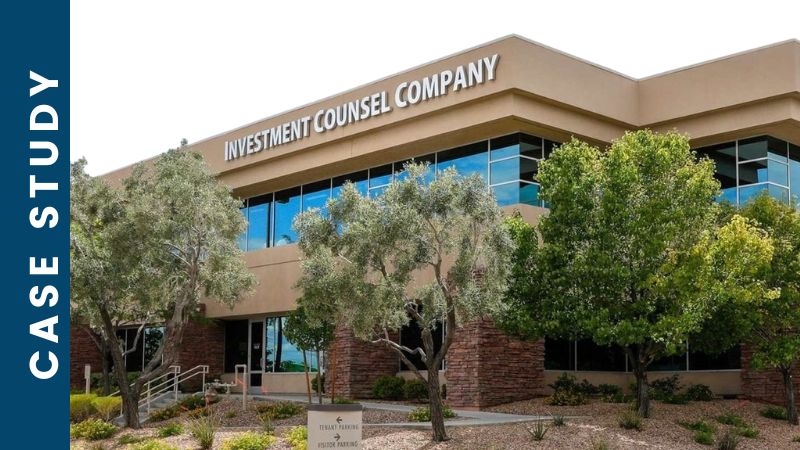
A small business that expected IT problems to keep cropping up, and now has everything monitored around the clock by a team it does not have to employ.
A free IT assessment tells you, in writing, where your data actually lives, which copies exist, and which of them anyone has ever restored from. No obligation at the end of it.