

The Hands-Off Firm That Got a Plan
John R. Waters & Company wanted nothing to do with managing IT. Switching MSPs moved them from reacting to problems to having someone approach them proactively.
A named advisor who owns your technology roadmap, your IT budget and your strategy reviews. Included in your ITS plan, not a separate retainer.
Most IT problems get fixed. Very few get planned for. When no one owns the plan above the day to day, the same decisions keep arriving late, and they arrive as invoices instead of choices.
Without a strategy layer, this is what leadership ends up carrying:
Strategy is only real when it is written down, costed and dated. Your vCIO produces three documents, and keeps them current.
Every ITS managed IT services plan includes an assigned vCIO and regular strategy reviews, so this is not a separate line on your invoice. The pricing page shows how the plans are built.
Three steps, and you own the output at the end of each one.
We inventory your systems, ages, contracts and gaps, then hand you a written picture of where you stand today.
You get a dated roadmap with costs attached, and nothing goes on it until you have approved the sequence and the spend.
Your vCIO revisits progress, changes and the forecast on a regular schedule, so the plan stays a plan and not a document.
Before you hire anyone, read what a roadmap is supposed to contain. Our white paper walks through why a growing business needs one, what belongs on it, and the steps to build your own. No form-filling theory, just the method our vCIOs use.
A vCIO is the person who owns your technology plan. Not the tickets, not the monitoring: the plan. They keep an inventory of what you run and when it needs replacing, build the budget that pays for it, manage the vendor contracts behind it, and report your risk and compliance position in language your board can act on. Then they sit down with you on a regular schedule and revise all of it.
No, and the difference is who carries the outcome. A consultant is hired for a project, delivers a recommendation, invoices, and leaves. Your vCIO stays, and is measured on whether the plan actually happened. They also see the operational reality: the tickets your team raises, the systems that keep failing, the renewal that is three months out. A consultant sees a snapshot. A vCIO sees the whole year, and has to live with the advice.
For ITS clients, nothing extra. An assigned vCIO and regular strategy reviews are part of your managed IT plan, so there is no separate retainer, no hourly rate and no per-meeting charge. That is deliberate: an advisor you have to pay by the hour is an advisor you avoid calling. If you want to see how the plans are built, the pricing page shows the tiers, and we have written up what the market normally charges for this and why.
Source: "Assigned vCIO and regular strategy reviews", the shipped ITS plan inclusions. [CONFIRM which plan tier carries the vCIO: two shipped sources disagree, so no tier is named on this page and no dollar figure is quoted here.]
A full-time CIO is a senior salary plus benefits, and most mid-sized companies cannot justify one for a role that is strategic rather than daily. A vCIO gives you the same function at the fraction of the week it actually needs, and brings a view across every client we run rather than one company's history. If you reach the size where a full-time CIO makes sense, a good vCIO helps you hire one.
Yes, and it is often the better fit. Internal IT teams are usually excellent at keeping the business running and short of the time, tooling and outside perspective to plan three years ahead. Your vCIO works with your team, not over them: they own the roadmap, the budget model and the vendor negotiations, while your people keep owning the environment they know best.
You do. We manage them for you. Your vCIO keeps the list of what you are paying for, when each agreement renews and what it is actually delivering, then handles the vendor conversations you do not want to be in. Licences you stopped using get cut. Renewals get negotiated before the auto-renew date rather than after it. You sign; we do the chasing.
These are executives and finance leads, not IT managers. Every quote below is about the part of the relationship that happens away from the help desk.
ITS led significant, transformational changes at Eastern Plumas Health Care to ensure we weren’t susceptible to attacks. Looking back, prior to that partnership, we had a lot of risks on campus. I’m glad nothing happened, but I’m even more proud that after implementing those systems, we’ve avoided data breaches and HIPAA violations throughout our five-year partnership.
Working with them is phenomenal - always bringing top-notch technology to the table, always bringing solutions, and making sure that you're aware of happenings in the industry so that your company is always ahead the competition. I would absolutely recommend them. It would be worth your time and you won't regret it.
One thing that has improved for us is more immediate service, which is wonderful. Financially, it helps us because I don't have to hire a whole team of people. You cannot have one person in in any agency.
ITS has been working with McQuarrie Associates for over 25 years. In that time, ITS has managed all of our IT needs. It is so easy to work them. With any kind of IT concern, ITS has been there with us. They provide a holistic service that is hugely valuable to us and we would not be able to function without it.
We'll be celebrating our 30th year and ITS has certainly helped us get to this point. With the knowledge that we've gained through ITS, I am confident that they are going to help us get through 30+ years, and as far as I'm concerned, hopefully, a lifelong relationship.
We were pleasantly surprised that we feel very valued… Everybody from the top down has been very accessible, communicative, and willing to share their knowledge and educate us, which has been huge.
Both stopped buying technology one emergency at a time. Both are ITS clients, and both stories are published.

John R. Waters & Company wanted nothing to do with managing IT. Switching MSPs moved them from reacting to problems to having someone approach them proactively.
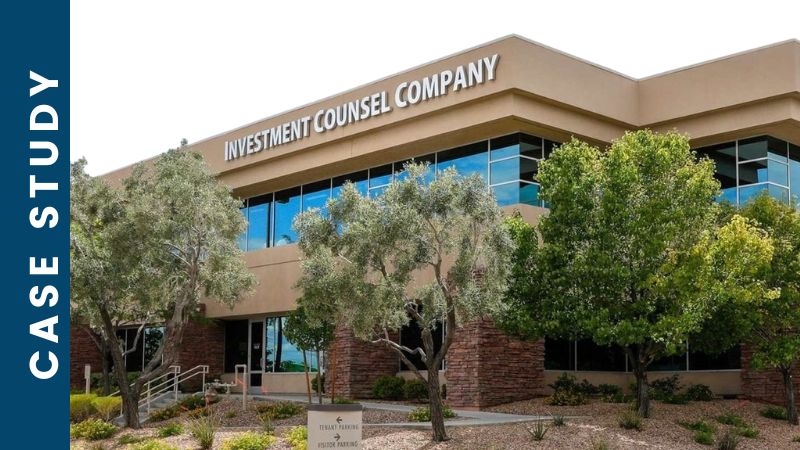
A small company used managed IT as a growth argument rather than a support contract: technology monitored around the clock by a certified team became something it could put in front of prospects.
Book a strategy call and we will walk through what you run today, where the gaps are, and what the first version of your roadmap looks like. No obligation at the end of it.